
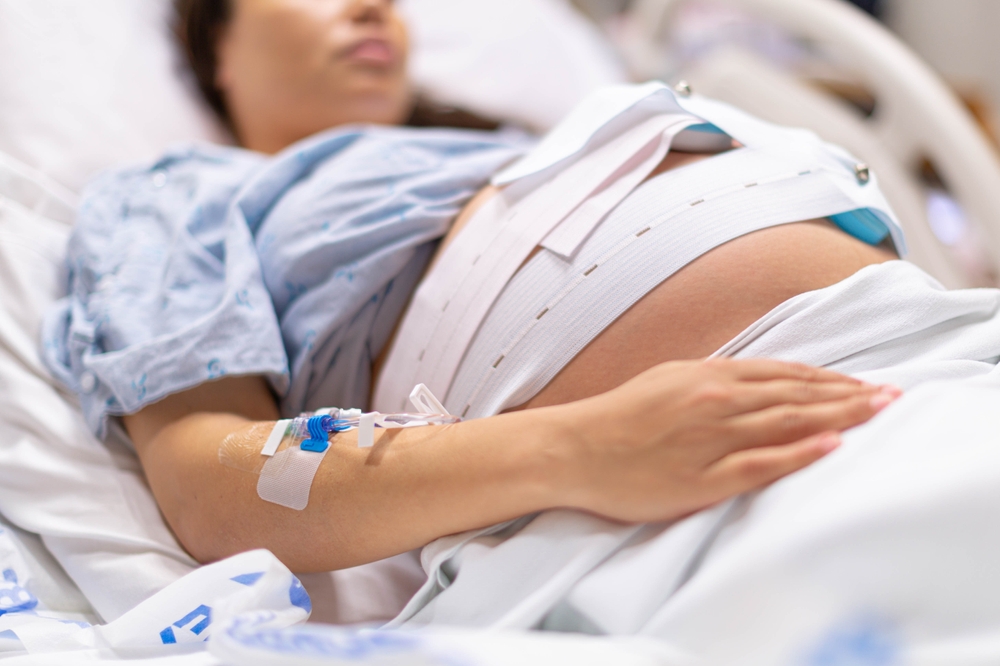
The United States sees approximately 3.66 million births each year, with birth rates highest in states like Texas, California, and Florida. But behind these numbers, providers across the country are managing increasingly complex cases. More women are having children later in life, obesity rates continue to climb, and cesarean deliveries remain common.
For anesthesiology providers, these aren’t abstract trends; they’re the patients who arrive in labor and delivery every day. Each one represents a unique data point that, in aggregate, tells the story of a growing need for technologies that support better neuraxial anesthesia obstetric outcomes.
Maternal age, obesity, and anatomical complexity
Women aged 30-34 now represent the largest birth cohort, accounting for more than 900,000 deliveries annually. Births to women 35-39 have increased 4% from the previous year, while births to women over 40 comprise approximately 120,000 cases. Advanced maternal age correlates with higher rates of medical comorbidities, anatomical changes, and cesarean delivery — all of which impact anesthesia planning.
Obesity represents perhaps the most significant anatomical challenge facing anesthesiology providers today. Nearly 30% of pregnant women have a BMI over 30, with pregestational obesity rates reaching similar levels. Studies demonstrate that obesity substantially increases the technical difficulty of neuraxial procedures, extends placement time, and reduces first-attempt neuraxial success rates. When body habitus obscures anatomical landmarks, providers that rely on palpation alone often require multiple attempts.
Cesarean delivery and neuraxial demands
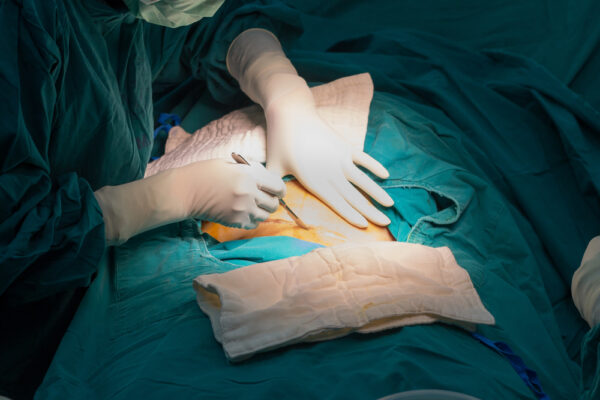
Complex anatomy and high-risk pregnancies drive the need for cesarean deliveries. Cesarean delivery rates in the United States approximate 32%, representing close to 1.2 million procedures annually. Primary cesarean rates stand at 22%, while repeat cesarean deliveries account for additional cases. The cesarean rate for first-time mothers, specifically, reaches 26%, a population where neuraxial techniques provide critical pain management options.
Regional anesthesia — particularly epidural, spinal, and combined spinal–epidural (CSE) techniques — forms the foundation of cesarean anesthesia care. Neuraxial anesthesia offers advantages over general anesthesia for cesarean delivery, including reduced maternal risk, improved pain control, and enhanced early bonding opportunities. However, the effectiveness of these techniques depends fundamentally on accurate placement.
The first-attempt success problem
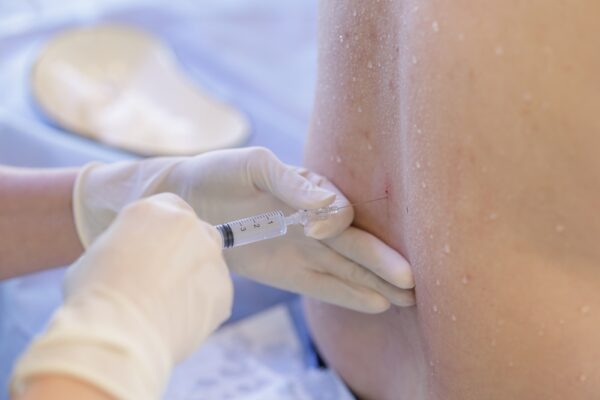
Multiple attempts at neuraxial placement carry consequences. Each additional needle pass increases patient discomfort, procedure time, and the risk of complications, including post-dural puncture headache (PDPH). In anatomically complex cases, especially those involving obesity, scoliosis, or prior spinal surgery, landmark identification through palpation may become unreliable.
Research demonstrates that pre-procedural ultrasound imaging may improve neuraxial success rates in technically difficult cases. One systematic review found that ultrasound guidance reduced placement failures and improved first-attempt neuraxial success compared to landmark-based techniques alone. For high-BMI patients, ultrasound identification of the midline and optimal insertion site proves especially valuable.
Emerging technology as clinical support
RIVANNA’s Accuro 3S can equip anesthesiology providers with anatomical visualization during needle insertion. The system uses automated image interpretation to help identify the epidural space and depth, midline location, and optimal needle trajectory via real-time needle tracking. This information may support clinical decision-making in cases where traditional palpation methods offer limited guidance.
Clinical evidence supports the use of pre-procedural ultrasound-assisted neuraxial techniques in obstetric populations. Studies show reduced procedure time, fewer needle passes, and improved patient satisfaction when imaging supports placement strategy. In the present environment — where positive neuraxial anesthesia obstetric outcomes are becoming even more challenging to achieve — Accuro 3S may be a much-needed tool in obstetric departments.
Implications for obstetric anesthesia
For anesthesiology providers, the data represent real patients who arrive every day — patients who depend on successful neuraxial placement.
Accuro 3S was engineered to solve a real problem: identifying neuraxial landmarks where palpation alone proves unreliable. When nearly 30% of obstetric patients present with obesity, when maternal age continues to rise, and when cesarean rates remain above 30%, ultrasound imaging guidance is likely on track to becoming a clinical necessity. Neuraxial ultrasound has the potential to improve landmark identification, boost first-attempt success rates, and lead to better patient outcomes — and they’re only becoming more valuable.