

Neuraxial anesthesia remains a foundational component of modern anesthetic practice, supporting procedures ranging from labor analgesia to major surgical interventions. In 2026, the field continues to evolve under the combined influence of clinical complexity, technological advancement, and growing expectations for measurable quality.
Across practice settings, clinicians are adapting to patients with higher body mass index (BMI), more comorbidities, and greater anatomical variability, all of which may complicate neuraxial access and increase procedural difficulty. At the same time, new tools and frameworks are reshaping how neuraxial procedures are planned, performed, and evaluated.
This is the current state of neuraxial anesthesia, defined by imaging, AI-assisted workflows, and a shift toward standardized, data-driven care.
Ultrasound-guided neuraxial techniques
Ultrasound has become an increasingly valuable tool in neuraxial anesthesia, particularly in patients where surface landmarks are difficult to identify. Evidence shows that ultrasound-assisted neuraxial techniques may improve landmark identification, reduce the number of needle passes, and support more efficient placement in technically challenging cases.
The role of ultrasound continues to expand, but how it is used remains uneven. Many clinicians still rely on pre-procedural scanning and skin marking, which may improve planning but do not provide continuous feedback during needle advancement. This gap may become more pronounced in cases involving obesity or spinal deformity, where patient movement or tissue displacement may reduce the reliability of pre-marked insertion points.
Device design is beginning to address these limitations. Systems developed specifically for neuraxial workflows are focusing on portability, simplified controls, and integration into sterile environments. These systems are designed to reduce setup time and support consistent use in labor and delivery settings, where access to larger ultrasound systems may be limited.
Recent regulatory activity reflects this shift. RIVANNA has reported FDA 510(k) clearance for an ultrasound guidance platform with AI-driven imaging software intended to assist with anatomical identification during neuraxial procedures. The company has also announced clearance of a sterile needle guide kit designed to support procedural workflows and transducer stability in neuraxial applications.
The direction is clear. Ultrasound is transitioning from a supplemental tool to a more integrated component of procedural planning and execution.

Artificial intelligence in anesthesia
Artificial intelligence (AI) is increasingly present in neuraxial anesthesia, primarily as a tool for improving consistency and reducing variability. Its most practical applications today center on image interpretation and procedural planning.
AI systems trained on large datasets may assist with identifying midline structures, estimating epidural depth, and highlighting interlaminar spaces. These capabilities support clinicians when image interpretation is difficult or when experience levels vary across providers.
In addition, AI-driven systems may provide real-time feedback on image quality and probe positioning, helping clinicians maintain optimal visualization throughout the scanning process. This form of decision support is especially relevant in teaching environments and in settings where access to experienced providers may be limited.
The broader role of AI in anesthesiology continues to be explored at the professional level. Educational programming and clinical discussions within anesthesia societies increasingly focus on how AI may be applied responsibly to improve procedural safety and workflow efficiency.
Future applications may include predictive analytics that use patient-specific data to anticipate procedural difficulty, allowing clinicians to plan resources and approach before needle insertion begins.
Extended reality (XR) technologies
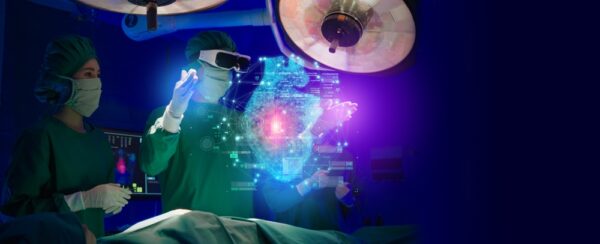
Training in neuraxial anesthesia is also evolving. Extended reality technologies, including virtual and augmented reality, are being incorporated into simulation-based education to improve procedural readiness.
These platforms allow clinicians to practice probe positioning, image interpretation, and needle alignment in controlled environments. They also provide exposure to a wider range of anatomical variations than would typically be encountered during training.
Recent research highlights the growing role of immersive technologies in medical education, particularly for procedural specialties where repetition and feedback are critical to skill development. Educational frameworks are also beginning to formalize the use of XR in anesthesia training, emphasizing its ability to improve technical proficiency and decision-making.
As these tools become more accessible, they are expected to complement traditional training methods and help standardize procedural competency across institutions.
Updated guidelines and best practices
Efforts to standardize neuraxial anesthesia practices are gaining traction. Variability in technique, terminology, and documentation has long been recognized as a barrier to consistent outcomes.
Recent work in obstetric anesthesia has focused on defining measurable quality benchmarks. A 2025 peer-reviewed study proposed a structured framework for neuraxial labor analgesia that includes targets for access, safety, effectiveness, documentation, and patient experience.
Examples of these benchmarks include:
- Timely access to neuraxial analgesia following patient request
- Low rates of dural puncture and epidural replacement
- Rapid achievement of adequate pain relief
- High levels of documentation completeness
- Strong patient satisfaction metrics
This approach shifts quality assessment from general impressions to clearly defined performance indicators, enabling departments to track outcomes and identify areas for improvement.
Infection control remains a central focus. Updated consensus guidance emphasizes strict aseptic technique, consistent use of sterile ultrasound covers, and tailored protocols for high-risk patients.
Addressing current challenges and future directions
Several persistent challenges continue to shape neuraxial anesthesia practice. Medication shortages remain a significant concern. The U.S. Food and Drug Administration (FDA) tracks ongoing shortages that affect anesthetic agents and related medications, requiring clinicians to adapt drug selection and dosing strategies in real time.
Workforce constraints are placing additional pressure on anesthesia providers. The American Society of Anesthesiologists has identified workforce shortages as a growing issue that may impact access to care and procedural capacity.
These pressures are accelerating the adoption of technologies and workflows that improve efficiency and reduce variability. Imaging, AI, and standardized protocols are being integrated not as optional enhancements, but as necessary tools for maintaining quality under constrained conditions.
Looking ahead, innovation is expected to focus on improving real-time procedural guidance, enhancing imaging clarity in difficult anatomies, and integrating data systems that support both clinical decision-making and quality improvement.

How will you stay informed?
Neuraxial anesthesia in 2026 reflects a field in active transition. Imaging technologies are becoming more embedded in workflows. AI is supporting consistency in decision-making. Quality frameworks are defining measurable standards for care. These changes are transforming how clinicians approach neuraxial procedures and how departments evaluate success.
Staying informed requires more than awareness of new tools. It requires engagement with evolving best practices, participation in ongoing education, and alignment with emerging quality benchmarks.
The opportunity ahead is clear. By integrating these advancements thoughtfully, clinicians may continue to improve procedural reliability, patient experience, and overall standards of care.